
From Conversation to Conversion: Closing the Value Recovery Gap
If we understand what needs to change, why does so much sustainability activity still struggle to translate knowledge into implementation?
The world is not short of ideas about sustainability. Nor is it short of scientific knowledge, ambitious commitments or promising technologies.
What remains in shorter supply are the practical mechanisms that turn those ideas into measurable, lasting economic and environmental change.
As Roy Henderson, CEO of Green Cell Technologies®, puts it: “The test of progress should no longer be how much we discuss, research or even produce. It should be how much value we unlock and recover from the resources we already have.”
Every year, scientists, policymakers, investors, businesses, NGOs and development organisations gather to confront food security, climate resilience, waste, sustainable agriculture, oceans and the bioeconomy.
These conversations matter. Research, collaboration and networks matter too. But one question deserves greater prominence when the delegates go home: What actually changed?
Beyond attendance figures, published reports and newly established working groups, what resource is being used differently? What previously discarded material is generating value?
Which producer earns more from the same harvest? Which technology has moved beyond the laboratory or pilot? And what continues working when the grant funding ends?
These are not always comfortable questions. With growing pressure on food, water, energy and natural resources, they are increasingly necessary.
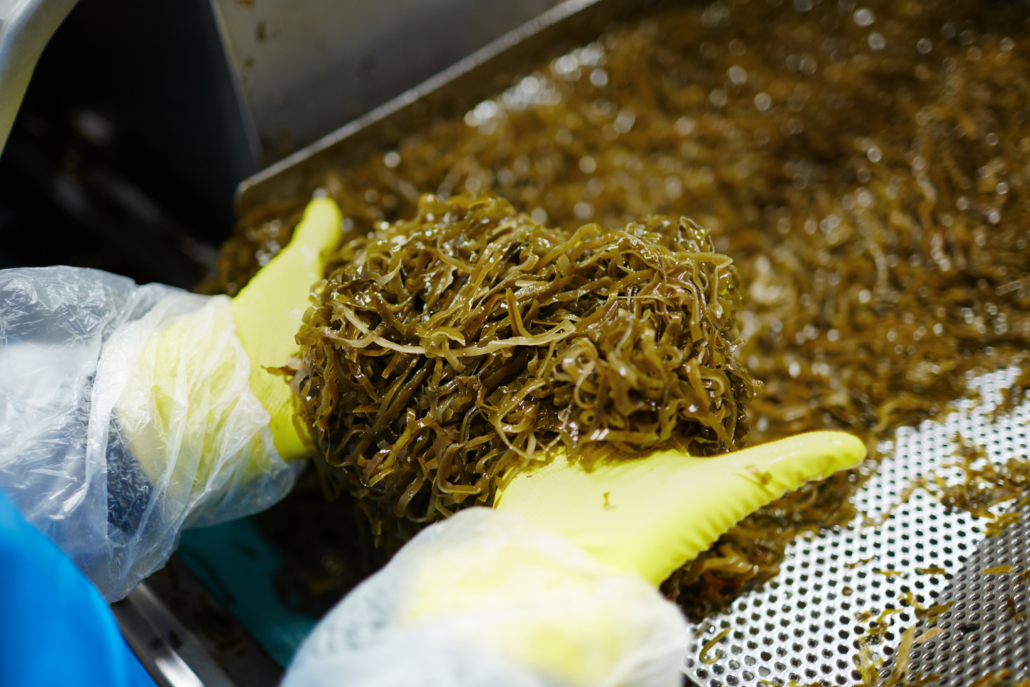
Seaweed: enormous promise, persistent problems
The emerging seaweed industry offers a revealing example. Its potential spans food, feed, bio-stimulants, cosmetics, nutraceuticals, pharmaceuticals, biomaterials, packaging and some energy applications.
An international ecosystem has grown around that potential: conferences, coalitions, research programmes, accelerators, public initiatives and investment forums. Yet familiar questions persist. How do we scale? Where are the markets? How do producers become profitable? How do we navigate regulation and attract investment? And critically, how do we process biomass economically?
This is not a failure of intelligence or commitment. Significant work is advancing cultivation, breeding, processing, product development and regulation. The unresolved challenge is the gap between potential and conversion.
Growing more seaweed does not automatically create a viable seaweed economy. The commercial outcome also depends on what happens to the biomass after harvest, and on who has the ability to process it.
In March 2026, UN Trade and Development reported that 2022 trade prices averaged approximately US$18.70 per kilogram for processed agar, compared with US$1.40 per kilogram for unprocessed seaweed used in non-food applications.
These are different products, not a like-for-like yield or profit comparison. They nevertheless illustrate how processing capability can influence where value is captured.
A September 2026 UNCTAD update reinforced the point: processed products represented 68% of seaweed export value, even while many producing countries remained concentrated in raw or lightly processed exports.
The future of seaweed will not be decided by harvest volume alone. It will also depend on the value that can be recovered economically from that volume.
Waste may be something our processing systems create
This principle extends far beyond seaweed. Food and agricultural processors handle peels, pomace, spent grain, pulp, stems, leaves, seeds, fibres, processing water and organic effluent.
Nature did not necessarily create these materials as waste. Often, our processing systems classify them that way. A conventional process may be designed to recover one commercially desirable component; everything remaining becomes secondary.
Value Recovery begins with a different question: What else is here?
Rather than extract one component and then seek uses for the residue, could we design processing from the outset to preserve and recover several viable value streams? That shifts the discussion upstream, from waste management to resource optimisation.
From grants to value
Grants remain essential. They support discovery, reduce the risk of emerging technologies and finance work that the commercial market may not initially undertake.
But a grant should ideally be a bridge, not the permanent economic model.
When a technology can recover commercially valuable outputs from an existing resource, the economics may begin to support continued adoption. A disposal cost may be reduced. A low-value stream may become a marketable ingredient. A producer may generate greater returns from the same harvest.
The ultimate test is whether those gains survive beyond the grant, supported by demonstrable value, reliable processing and genuine market demand. Environmental benefits also need to be measured rather than assumed.
The implementation gap
The next phase of the global sustainability conversation must focus increasingly on what can be deployed, sustained and replicated.
CGIAR’s impact report records that its research and innovation reached more than 20 million farmers between 2022 and 2024, with 471 innovations in use across 62 countries, and informed US$3.3 billion in third-party investment. These measures begin to answer the question: what happened as a result of the work?
CGIAR’s Scaling for Impact programme also acknowledges the difficulty of translating promising research into widespread, sustained use. That distinction between discovery and deployment is vital.
Recent research into food-waste valorisation identifies familiar barriers: inconsistent feedstocks, limited infrastructure, processing economics, fragmented regulation and uncertain markets. Scientific possibility does not by itself establish an industrial business case.
The challenge is not merely to demonstrate that more value exists within a biological resource. It is to establish whether that value can be recovered reliably, safely, economically and at a scale industry can sustain.
The Value Recovery Test
Perhaps sustainability initiatives involving biological resources should face six practical questions:
- What existing resource are we trying to use better?
- How much of its potential value is currently being recovered?
- Where in the existing process is value being lost, destroyed or discarded?
- What processing or technological intervention could recover more value without compromising product quality, safety or resource efficiency?
- Can that intervention demonstrate a commercially viable return after accounting for processing, energy, logistics, compliance and market demand?
- What measurable change should exist five years from now if we succeed?
The test does not replace science; it gives science a practical destination. It does not replace conferences; it gives them outcomes to pursue. And it helps investors identify where physical infrastructure and operating capability are needed.
Nature has already done the manufacturing
Before a crop reaches a processing facility, nature has already performed an extraordinary feat of manufacturing. Sunlight, water, minerals and biology have produced complex structures containing potentially valuable compounds.
The same is true of seaweed and many other biological resources currently treated as low-value residues. Land, water, energy, labour and time have already gone into producing them.
Before demanding more from the planet, perhaps we should become considerably better at recovering what it has already produced.
What if our greatest constraint is not always the amount of biomass available, but how much value we recover from it?
Closing that gap could become one of the most important economic opportunities of the emerging bioeconomy.
Nature has already done the manufacturing. Our job is to stop throwing away the value.
From conversation to a practical trial
The next conversation should begin with a resource, not another report. For producers, processors and innovators, the question is practical: what value remains within the biomass you already handle, and what would it take to recover more of it?
That is a conversation worth turning into a trial.
Roy Henderson is CEO of Green Cell Technologies® (GCT®), developer of the Disruptor® technology platform. GCT develops and licenses processing technology designed around Value Recovery – helping industries explore how to recover greater value from existing biological resources.
To discuss a biomass trial, contact info@greencelltechnologies.com