
Are We Measuring Productivity Wrong?
The next productivity revolution may not be about producing more.
It may be about getting more from what we already produce.
For generations, productivity has largely been a numbers game.
Tonnes per hectare. Yield per crop. Units per hour. Throughput per day and so on…
Produce more from the same amount of land, labour or time and productivity improves.
It is a model that has driven extraordinary industrial and agricultural progress.
But it may no longer be enough. Because there is something those measurements often fail to tell us:
How much of the potential value contained within that resource did we actually capture?
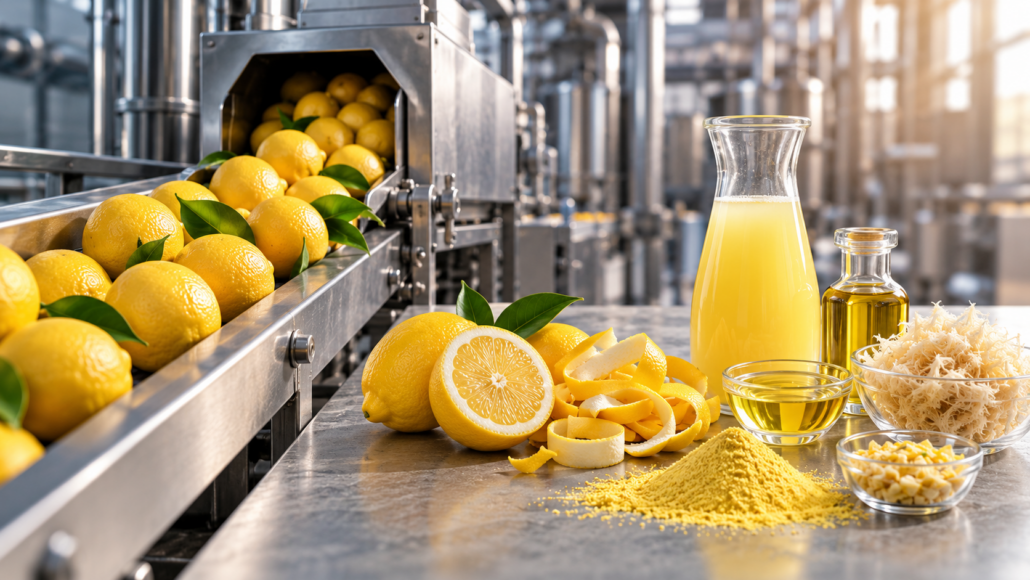
Consider two processors receiving exactly the same tonne of biological material.
Both process the same volume.
Both can claim the same throughput.
But one produces a primary product and a substantial residual stream requiring disposal.
The other produces the primary product while recovering additional useful ingredients, compounds or materials from the same input.
On a conventional productivity measure, their performance might appear remarkably similar. In reality, they are doing something fundamentally different.
One is measuring volume processed.
The other is increasing value recovered.
This suggests that the bioeconomy may need another metric alongside yield and throughput: Value recovered per unit of resource.
A different measure of productivity
It changes the economic question. Instead of asking only: How can we process more?
we can also ask: How much more economic value can this same resource generate?
That matters because increasing value does not necessarily require increasing volume.
If the same tonne of biomass can produce more usable outputs, manufacturers may be able to improve resource productivity without demanding another tonne from the farmer, the ocean or the environment.
The implications go beyond sustainability.
This is about economics.
Raw materials cost money.
Water costs money.
Energy costs money.
Transport costs money.
Waste treatment and disposal cost money.
If greater value can be recovered from the same input while reducing what leaves the process as low-value residue, the resource itself becomes more productive.
From efficiency to resource intelligence
Industry has spent decades becoming more efficient. The next opportunity may be to become more resource intelligent.
Efficiency asks how we can do the same thing using less time, energy or money. Resource intelligence asks whether we are doing the right thing with the material in the first place.
That distinction matters.
A highly efficient process that captures only a fraction of a resource’s potential value may still represent a missed economic opportunity.
The future of biological processing therefore shouldn’t be judged solely by how quickly material moves through a system.
It should increasingly be judged by what comes out of it – and what value is left behind.
The economics of doing more with the same.
This is where Value Recovery moves beyond an environmental proposition.
For businesses, it becomes a productivity proposition.
For producers, it may create additional markets from the same harvest.
For manufacturers, it may create additional revenue streams from existing inputs.
For investors, it changes the economics of biological resources.
And for economies facing constraints on land, water, energy and raw materials, it offers something particularly important: growth without assuming that every increase in value must begin with an increase in resource consumption.
We will still need to produce more of many things. But perhaps more should no longer be our only definition of progress. The more interesting question may be:
How much better can we use what we already have?
Because the next great leap in productivity may not come from another tonne.
It may come from discovering how much more the first tonne was capable of delivering.
Roy Henderson is CEO of Green Cell Technologies® (GCT®), a biotechnology company developing and licensing processing technologies centred on Value Unlocking and Value Recovery.




Leave a Reply
Want to join the discussion?Feel free to contribute!