
What More Could Your Biomass Do?
Why the next opportunity in food processing may begin before the first processing decision
Food manufacturing has spent decades improving efficiency.
Production lines are faster. Equipment is more sophisticated. Quality control is increasingly precise. Yet one fundamental question deserves more attention: are we recovering the greatest commercially useful value from the biological resources we process?
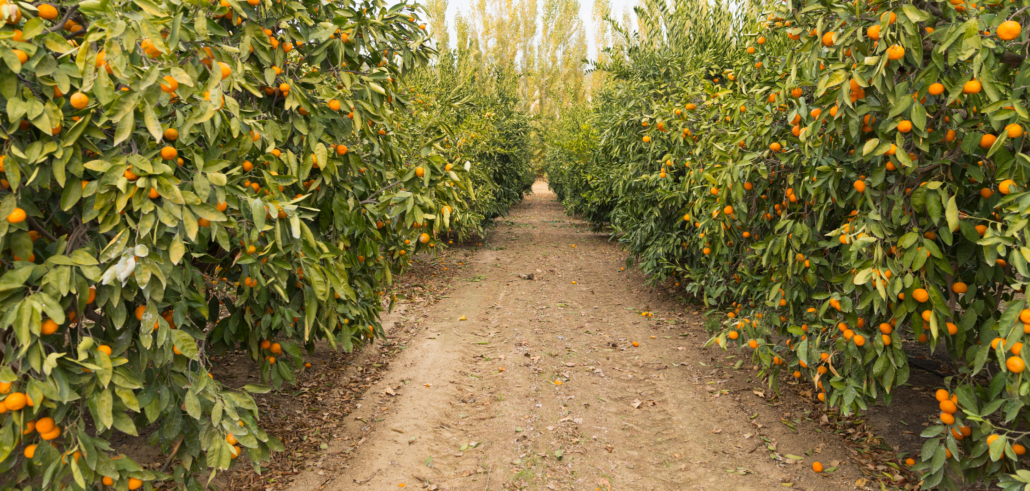
Fruit and vegetables are not single-purpose raw materials.
They contain water, fibre, sugars, pigments, flavour compounds and a complex range of other constituents. The value ultimately recovered from those materials depends partly on what the manufacturer intends to produce — but also on how the material is processed.
The importance of the starting point
Conventional processing systems are often designed around a specific finished product.
A juice manufacturer may prioritise clarity and consistency. A purée manufacturer may prioritise texture and viscosity. An ingredient producer may focus on concentration, shelf life or compatibility with downstream formulations.
These are legitimate requirements.
But they also influence which parts of the original resource become commercially useful and which are separated, downgraded or discarded.
The opportunity is not to suggest that all separated material should remain in the finished product. Rather, it is to investigate whether different processing technology could make more of the resource usable while still meeting the required specification.
Value recovery is a commercial question
A higher yield is valuable only if the additional material contributes to a product that can be sold and meets the customer’s requirements.
Similarly, a new ingredient format creates value only if there is a market for it and the additional processing costs are justified.
This is why Green Cell Technologies® approaches value recovery as a technical and economic evaluation.
Our patented Dynamic Cellular Disruption® technology, delivered through the Disruptor®, provides a different way to process biological material.
Depending on the feedstock and intended application, this can create opportunities to investigate fibre utilisation, ingredient characteristics, usable yield and processing flexibility.
The potential benefits must be measured, not assumed.
One resource, several possibilities
A fruit processor may produce a purée as its final product.
Another manufacturer may require a purée as an intermediate ingredient.
A third may wish to investigate a powder, using suitable drying technology as part of a broader processing configuration.
These are not interchangeable outcomes. Each has its own technical requirements, quality specifications and commercial economics.
The important point is that the possibilities should be considered before assuming there is only one valuable processing pathway.
Testing the proposition
A controlled comparison using representative feedstock can establish whether a different process delivers an advantage.
Relevant measures may include usable yield, fibre and solids characteristics, viscosity, texture, product quality, processing requirements, energy consumption, waste and total cost per kilogram of compliant finished product.
If the results do not support a commercial case, there is no reason to change.
If they do, the manufacturer has evidence on which to evaluate the next step.
A different measure of productivity
Perhaps the future of food processing should not be measured only by how much raw material passes through a factory.
Perhaps it should also be measured by how much commercially useful value emerges from that resource.
That is the opportunity GCT is inviting manufacturers to explore.
Interested in assessing your own feedstock? Contact Green Cell Technologies® to arrange an initial technical discussion about Disruptor® processing technology by emailing info@greencelltechnologies.com




Leave a Reply
Want to join the discussion?Feel free to contribute!